Indian Army Major Swathi Shantha Kumar Shares Experiences, Challenges In South Sudan After Winning UN Secretary-General's Award 2025
· Free Press Journal
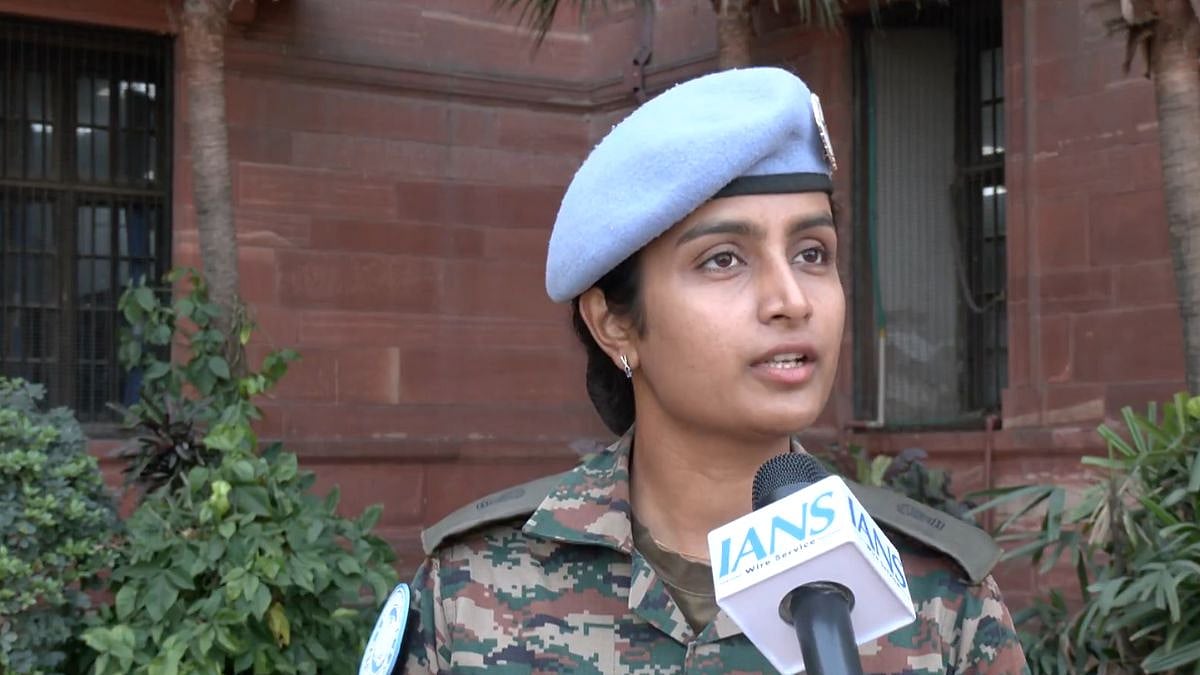
New Delhi: Major Swathi Shantha Kumar, a Bengaluru-based officer serving with the United Nations Mission in South Sudan (UNMISS) has been honoured with the UN Secretary-General’s Award 2025 in the gender category for her project ‘Equal Partners, Lasting Peace’. Speaking to IANS, the Indian Army officer shared her experiences during the mission, her key responsibilities on the ground, and the challenges she faced while serving in the conflict-affected region.
Visit sweetbonanza-app.com for more information.
Major Swathi Kumar said the recognition reflects the collective effort of her entire team of Indian women peacekeepers who were deployed in South Sudan for the mission.
“I have recently received the UN Secretary-General’s Award for 2025 in the gender category for gender-inclusive peacekeeping. This award signifies the effort my team has put in because we were a team of 20 women soldiers from India. It was the first time we were participating in the UN mission in South Sudan. This recognition reflects the work my team has done and the guidance we received from our battalion, the Army Headquarters in Delhi, and the Indian Army,” she told IANS.
ICC T20 WC26: Devotees Offer Special Prayers At Madurai Temple Ahead Of IND VS NZ Final In Ahmedabad | VIDEODelhi: Major Swathi Shantha Kumar, who won the UN Secretary-General's Award 2025 for her project 'Equal Partners, Lasting Peace', says, "As a military personnel, being in the Indian Army, we have begun to overcome challenges. We don't face challenges as such that way. But over… pic.twitter.com/DzHdlE5Y4p
— IANS (@ians_india) March 7, 2026
Major Swathi Kumar further added that although the soldiers were deployed on the ground in South Sudan, they constantly received guidance and support from India.
“Even though we were the soldiers on the ground, we were always guided by our battalion and Army Headquarters in Delhi. That support helped us move forward and carry out our responsibilities effectively,” she said.
Speaking about her role in the mission, Major Swathi Kumar said her primary responsibilities involved operational planning and conducting various types of patrols to ensure the safety of civilians and maintain peace in the region.
“My primary responsibilities included carrying out operational activities. We were mainly involved in planning patrols because, as a battalion deployed in the UN mission, we conduct different types of patrols. These include short-distance and long-distance patrols. We also conduct river and air patrols,” Major Swathi Kumar said.
Operation Epic Fury: Is US Deploying 3rd Carrier, USS George H.W. Bush (CVN‑77), To The Middle East Amid Iran War? Here's All We KnowDelhi: Major Swathi Shantha Kumar, who won the UN Secretary-General's Award 2025 for her project 'Equal Partners, Lasting Peace', says, "The core objective of this project was the actions which my team has been conducting in the entire mission. So when we reached the mission… pic.twitter.com/ITP2tgBtJz
— IANS (@ians_india) March 7, 2026
She added that the terrain and weather conditions in South Sudan often made movement extremely difficult.
“During the wet season, many roads become inaccessible due to flooding and heavy rainfall. Because of this, we had to adopt different approaches to reach remote areas and far-off payams. Conducting river and air patrols helped us ensure that we could still reach communities in those regions,” she added.
Talking about the challenges faced during the mission, Major Swathi Kumar said that while Indian Army personnel are trained to deal with difficult situations, serving in a completely new environment required adaptability.
“As military personnel in the Indian Army, we are trained to overcome challenges. However, the environment there was entirely new because we were serving in a different country and interacting with different communities. We had a specific mandate to execute, and within that mandate, the protection of civilians was the top priority,” she said.
'US Reached Out To India To Buy Russian Oil To Ease Pressure On Global Oil Markets': Chris WrightDelhi: Major Swathi Shantha Kumar, who won the UN Secretary-General's Award 2025 for her project 'Equal Partners, Lasting Peace', says, "My primary responsibilities were carrying out operational activities, like we were mainly involved in planning of the patrols, because as a… pic.twitter.com/S7TCn3fApz
— IANS (@ians_india) March 7, 2026
Major Swathi Kumar also spoke about the motivation behind her award-winning project ‘Equal Partners, Lasting Peace’. According to her, the project reflected the work and engagement carried out by her team during the mission.
“This project represents the actions we undertook during the mission. When we went there, we realised that women soldiers and peacekeepers needed to be more involved in operational activities and community engagement,” she said.
Major Swathi Kumar added that her team also identified a communication gap between the local community and the UN mission, which encouraged them to take more proactive steps.
“When we reached the mission area, we realised that there was a small gap between the community and the UN mission. We started engaging with the people through operational patrols and community interactions. These activities helped us build trust and improve communication between the mission and the local population,” she said.
President Donald Trump Privately Weighs Small US Ground Forces In Iran: ReportDelhi: Major Swathi Shantha Kumar, who won the UN Secretary-General's Award 2025 for her project 'Equal Partners, Lasting Peace', says, "Throughout our training and throughout my entire deployment even in India, I have always adhered to that and our entire training has been… pic.twitter.com/l9bSlu9bqS
— IANS (@ians_india) March 7, 2026
Highlighting the values that guide Indian Army personnel, Major Swathi Kumar said the principle of “service before self” remained central to their work during the mission.
“The ethos of the Indian Army is ‘service before self’. Throughout our training and our deployment, both in India and abroad, we follow this principle. When we participate in peacekeeping missions and interact with people there, we understand that we are also representing our nation,” she said.
She also had a message for women serving in peacekeeping roles.
US-Iran-Israel War: 'Operation Epic Fury Nearing Goals As US Assesses Iran’s Future Leadership,' Says White House | VIDEODelhi: Major Swathi Shantha Kumar, who won the UN Secretary-General's Award 2025 for her project 'Equal Partners, Lasting Peace', says, "This project is just a significance of our actions in the mission. So when we went there, that's when we realised that the female soldiers or… pic.twitter.com/slLITFDXYG
— IANS (@ians_india) March 7, 2026
“For every woman serving in such missions, it is important to believe in the mission because the mandate itself clearly states what needs to be done. Every community and every mission has its own challenges, so it is important to find innovative approaches and trust one’s own process,” she said.
Major Swathi Kumar further emphasised the importance of empowering women in society.
“Empowering women does not mean empowering just one individual; it means empowering an entire family. When women are given education, economic stability, and opportunities, it benefits the whole community,” she added.
(Except for the headline, this article has not been edited by FPJ's editorial team and is auto-generated from an agency feed.)