Budget 2026: GDP expected to grow slightly – but not enough for meaningful change
· Citizen
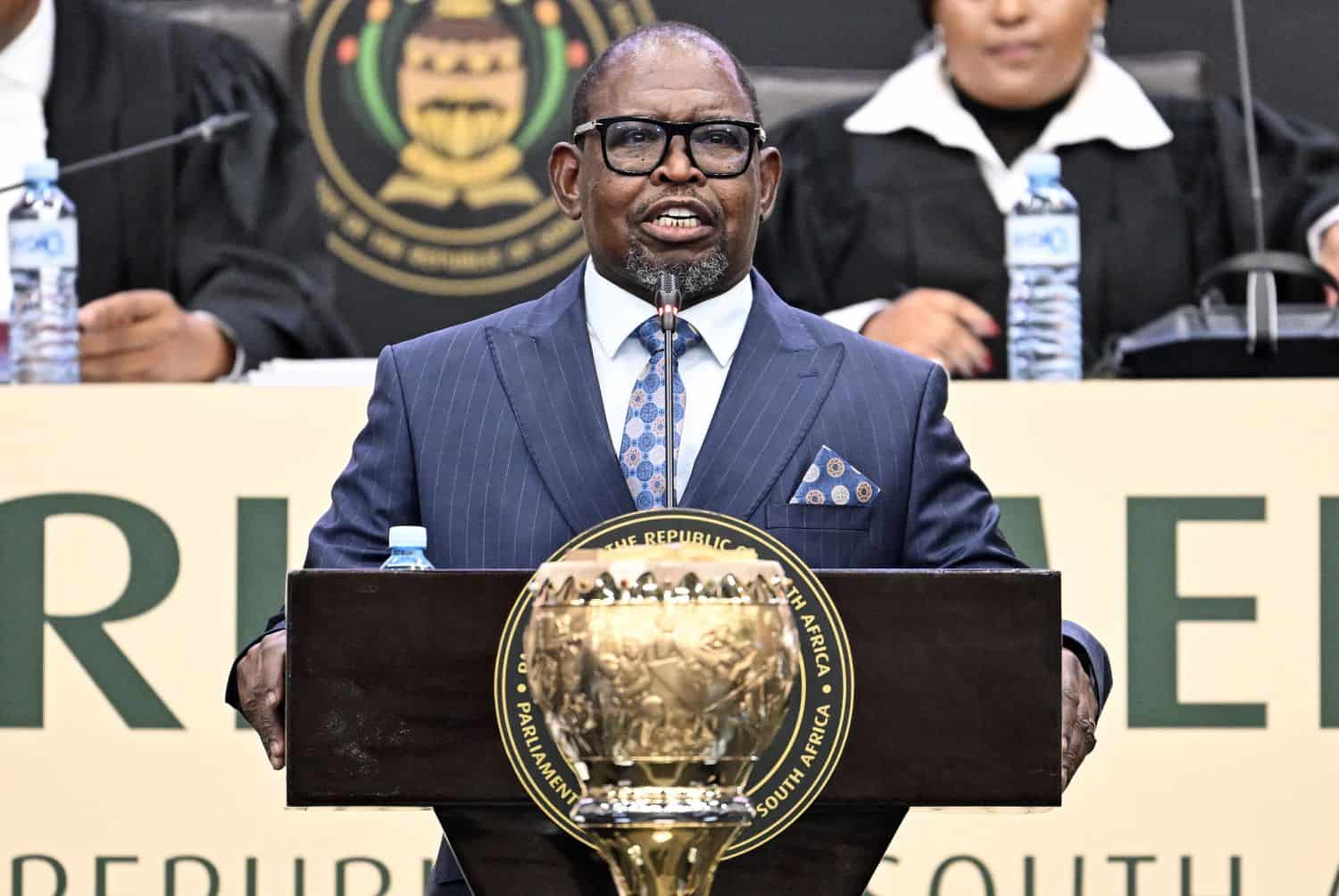
Finance Minister Enoch Godongwana delivered the 2026 Budget Speech with some optimism about South Africa’s continued economic growth. However, National Treasury has noted that the growth will not bring any meaningful change.
Visit asg-reflektory.pl for more information.
He is speaking at the Nieuwmeester Dome in Cape Town on Wednesday. The minister noted that the country’s economy is “steadily improving”, with growth projected at some 1.6% in 2026, following 1.4% in 2025.
“We project real economic growth of 1.6% in 2026, an improvement from the 1.4% estimated in 2025,” he said.
Threats to economic growth
Godongwana highlighted several risks that could threaten the country’s economic outlook.
“Over the medium term, growth is expected to average 1.8%, reaching 2% by 2028,” he said.
“Persistent logistics bottlenecks, weak public infrastructure and the recent outbreak of foot-and-mouth disease continue to weigh on economic activity and pose risks to the outlook.”
Godongwana highlighted that the only long-term solution is to grow the economy quickly in a way that benefits everyone.
How to increase the GDP
A National Treasury document noted that growth remains well below levels needed to meaningfully reduce unemployment and generate sufficient revenue to expand social and economic services.
The department expects critical reforms to increase gross domestic product (GDP) growth, improve government efficiency, and scale up public investment to add momentum to the economic recovery.
Treasury’s growth strategy focuses on maintaining macroeconomic stability, implementing structural reforms, boosting state capability, and raising the level of public infrastructure investment.
ALSO READ: SA back from the brink, now for the hard part – Hendrik du Toit
Household consumption to benefit from growth
According to the 2026 budget, household consumption remains resilient, while exports will benefit from stronger commodity prices over the medium term.
“Although household consumption is forecast to ease from the high growth estimated for 2025, it is expected to contribute the most to medium-term growth, supported by further gains in real purchasing power, moderately stronger wage growth, easing inflation, wealth gains from rising asset prices, improved consumer sentiment and better credit conditions,” reads the document.
“Additional support for growth is expected to come from private sector investment – encouraged by a relatively resilient global environment – and easing domestic supply constraints. A continued recovery in rail and port capacity is also expected to boost foreign trade volumes over the medium term.”
Unemployment in South Africa
The official unemployment rate in South Africa fell to 31.4% in the first four quarters of 2025. Total employment reached a high of 17.1 million.
“However, the labour force absorption rate remains low at 40.6%, below the pre-pandemic level of 43.1%, indicating that only four out of 10 adults are employed or actively seeking work. South Africa’s persistently and extremely high unemployment rate reflects the depth of structural constraints in the labour market, where labour force growth exceeds the pace of job creation,” said Treasury.
“Faster, more inclusive economic growth that expands productive capacity and supports labour-intensive sectors is the key to reducing unemployment. Achieving much higher levels of job creation over the medium- to long-term requires South Africa to address longstanding regulatory barriers, narrow spatial and infrastructure disparities, reduce high levels of crime, and improve education and training outcomes.”
Operation Vulindlela remains central
“Effective reform implementation depends on a capable state,” said Treasury. The Budget Review document notes that Operation Vulindlela remains key to boosting state capability.
“Reforms underway include shifting to a utility model for water and electricity services, with metro trading services reforms having commenced,” read the document.
“This model emphasises running these services like businesses that are accountable to the government and the public. To date, the government has allocated performance-based grants to seven qualifying municipalities to strengthen management accountability, financial transparency, cash flows and infrastructure maintenance in water, sanitation and electricity services.”
ALSO READ: Standard Bank sees brighter future for SA economy – but these issues need to be addressed first
Cattle disease to drive inflation
Treasury further noted that inflation is expected to increase from 3.2% in 2025 to 3.4% in 2026, driven by higher food prices, particularly meat, due to supply disruptions linked to foot-and-mouth disease.
“Inflation is forecast to ease to 3.3% in 2027, and 3.2% in 2028, but risks from geopolitical tensions, exchange rate volatility, administered prices and animal disease outbreaks remain elevated.
“The reduction of the inflation target to 3% with a 1 percentage point tolerance band will structurally reduce inflation, helping to protect real income levels.
“Inflation expectations have declined further, with the Bureau for Economic Research measure falling to its lowest level on record following the 2025 Medium-term budget policy speech (MTBPS) announcement, indicating that expectations are adjusting to the new target quickly.”
More risks
The Budget Review document highlighted that risks to global growth remain tilted to the downside, largely as a result of geopolitical tensions. This is as the International Monetary Fund forecasts global economic growth of 3.3% in 2026, similar to the 2025 outcome, with prospects continuing to diverge across regions.
Back to risks, Treasury noted that disruption of key shipping routes, for example, could raise transport costs, triggering a broad-based increase in energy prices, raising global inflation and weakening growth.
“Upside risks include faster adoption of artificial intelligence that boosts productivity, and progress in trade negotiations to reduce tariffs and enhance policy predictability.”
Bring it home, Treasury said domestic risks include exposure to climate and weather‑related shocks, which continue to raise the cost of doing business and threaten production and investment prospects.
In contrast, faster implementation of structural reforms – particularly in energy and logistics – would boost potential growth.
Sector performance and outlook
The Budget Review document outlined that primary sector performance is led by strong agricultural production, with lower livestock output due to animal disease offset by strong horticultural and seed output, which have benefited from favourable weather conditions.
“Although mining has benefited from higher prices for gold and platinum group metals, these are unlikely to lead to a reversal of the long-term contraction of South African mining output.
“The primary sector outlook is supported by stable energy supply, reduced logistics constraints, digitalisation of the mining cadastre and expectations of La Niña rains benefiting the 2026 agricultural season, while biosecurity risks, particularly that of foot-and-mouth disease.”
Treasury notes that, in the secondary sector, activity has been weak in electricity, manufacturing and construction.
NOW READ: Can Operation Vulindlela really help grow the economy? Q3 progress report tabled