Mumbai’s Musical Road: When Novelty Distracts From Civic Need
· Free Press Journal
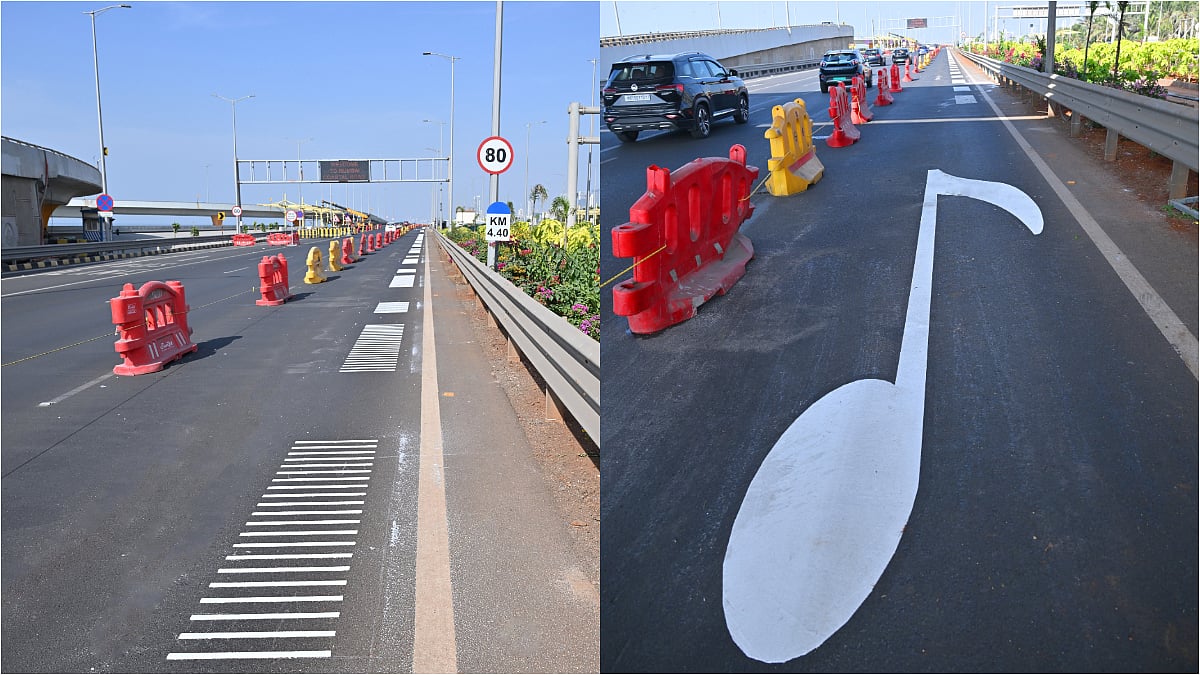
Mumbai, Feb 23: I first experienced Mumbai’s new “musical road” the way most people did: by driving over it, mildly curious, expecting something fleeting and perhaps even charming. What I heard instead was neither musical nor fleeting. It was intrusive, oddly discordant, and impossible to ignore. More importantly, it prompted an uncomfortable question: in a city still struggling to get the basics right, why are we investing in novelty before fixing what is visibly broken?
Visit cat-cross.com for more information.
Installed on a 500-metre stretch of the Coastal Road, the musical road uses grooved asphalt to play Jai Ho when vehicles pass over it at roughly 80 kmph. Launched in early February amid considerable fanfare, the project was presented as a blend of innovation and road safety, developed with international technical assistance. It also came with a price tag of ₹6.21 crore. In isolation, that number may not raise eyebrows. In context, it should.
Residents raise concerns
Within weeks, the novelty wore off, replaced by complaints. Residents in Breach Candy and surrounding neighbourhoods began reporting a constant, low-grade noise that started early in the morning and stretched late into the night. What was intended as a momentary auditory experience for motorists became, for hundreds of families, an unavoidable background disturbance. More than 650 households formally wrote to the BMC, describing sleep disruption and the sense of being subjected to an experiment they had never agreed to.
Unresolved infrastructure issues
Yet the musical road is not an isolated misstep. It sits within a larger infrastructural context whose everyday usability remains unresolved. Anyone who has tried accessing the Coastal Road promenade knows this. Entry and exit points are confusing, poorly signposted, and often feel actively hostile to pedestrians. Junctions near Haji Ali and Worli demand guesswork rather than offering guidance, with little clarity for walkers or cyclists. The gap between announcement and experience is hard to miss.
That gap became impossible to ignore during the 2025 monsoon. Heavy rains flooded tunnels and underpasses along the Coastal Road, including a pedestrian underpass submerged by seawater during high tide. This was particularly unsettling because the project was repeatedly described as climate-resilient, equipped with sea walls and floodgates. These are not cosmetic lapses. They are foundational concerns in a city where monsoon preparedness is a matter of survival.
Innovation versus fundamentals
None of this is an argument against creativity in public infrastructure. Cities across the world invest in art, playfulness, and sensory experiences, but only after the fundamentals work. Delight cannot substitute for safety, and novelty cannot compensate for unfinished systems. In Mumbai’s case, too many basics remain unresolved for such embellishments to feel earned.
Mumbai is an Alpha-level global city by wealth and economic output, yet its public realm often tells a different story. The distance between ambition and execution is where frustration takes root. Civic innovation must respond to how people actually experience the city, not how it photographs at inauguration.
Also Watch:
Mumbai News: Breach Candy Residents Sound Alarm Over Coastal Road’s 'Musical' Noise PollutionIf the musical road has struck a chord, it is not the one intended. It has reminded the city of a simple truth: before adding new notes to the urban soundtrack, Mumbai must first fix the noise caused by neglect. Public money is not meant to entertain the city; it is meant to serve it.
Ankieta Kothari is the founder of The Bombay Blueprint, a public platform chronicling Mumbai’s architecture, heritage, and evolving urban landscape.
To get details on exclusive and budget-friendly property deals in Mumbai & surrounding regions, do visit: https://budgetproperties.in/