Howard Lutnick’s Epstein Story Doesn’t Make Any Sense
· The Atlantic
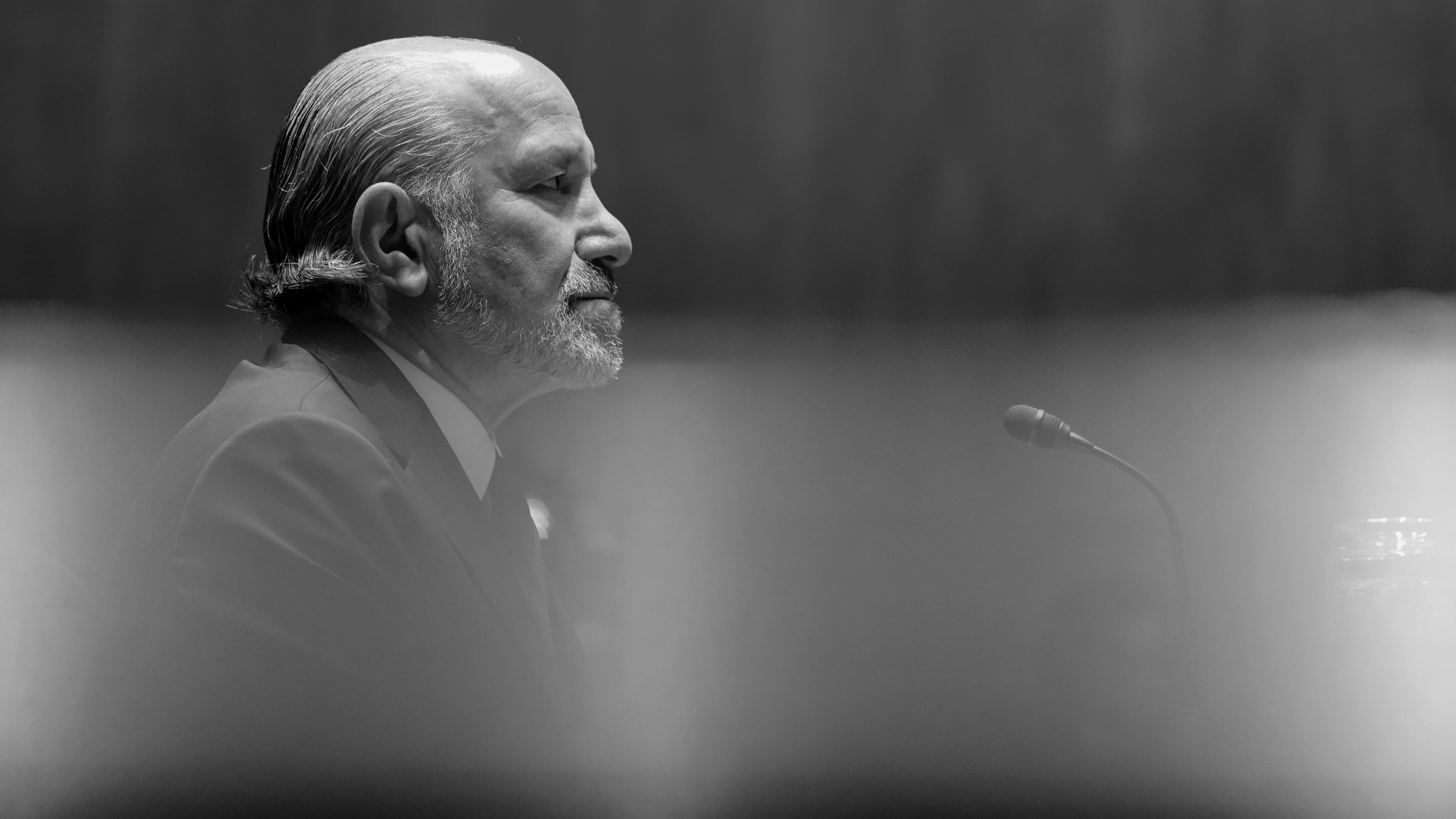
This is an edition of The Atlantic Daily, a newsletter that guides you through the biggest stories of the day, helps you discover new ideas, and recommends the best in culture. Sign up for it here.
Visit chickenroad.qpon for more information.
“I have nothing to hide. Absolutely nothing,” Commerce Secretary Howard Lutnick told a Senate committee yesterday. Perhaps that’s true—but given his recent history, don’t bet on it.
During a podcast interview this past fall, Lutnick talked about an unsettling encounter he and his wife had with the late sex offender Jeffrey Epstein, who used to be his next-door neighbor, in 2005. After Epstein offered them a house tour and showed them his infamous massage table, Lutnick recalled, he was creeped out and left. “My wife and I decided that I will never be in the room with that disgusting person ever again,” he said. “So I was never in the room with him socially, for business, or even philanthropy.”
Only that wasn’t true at all. Documents in the Epstein files released by the Justice Department show repeated, if more cordial than chummy, conversation between the two men, as well as some shared business dealings. That’s okay, you might think—they never hung out socially again. Right? He seemed to confirm that, recently telling The New York Times, “I spent zero time with him.”
Well, about that: Yesterday, testifying before Congress, Lutnick reiterated, “I barely had anything to do with that person.” Then he admitted to having visited Epstein’s private island in 2012.
“I did have lunch with him, as I was on a boat going across on a family vacation,” Lutnick said. “My wife was with me, as were my four children and nannies. I had another couple; they were there as well, with their children. And we had lunch on the island. That is true. For an hour. And we left with all of my children, with my nannies, with my wife.”
Lutnick seems understandably eager to show that he was not involved in sexual misconduct, and as Senator Chris Van Hollen noted, there is no evidence that he was. But he has no answer for his misleading statements about his dealings with Epstein, and his previous lies make it harder to believe him now. So much for having nothing to hide.
The Trump administration has always been tied to the Epstein scandal—the president himself was once a close friend of Epstein’s—but these new details drag his allies still further into the spotlight. Even before his testimony, Lutnick was facing calls to resign from Democrats as well as from renegade Republican Representative Thomas Massie of Kentucky. The secretary, whose penchant for putting his foot in his mouth was already well established, seems to have held on to his job this long only because he is personally friendly with Donald Trump and because the president refuses to give his political adversaries satisfaction by firing anyone. (This stands in contrast to many other organizations and institutions that have been eager to create distance from Epstein by separating themselves from individuals who were connected to him.)
But Lutnick isn’t the only top Trump aide to come up in the new tranche of documents. Navy Secretary John Phelan, a reported billionaire Trump donor who was appointed despite lacking any military or naval experience, was listed as a passenger on flights between London and New York on Epstein’s private plane in 2006. (The flights took place before Epstein was first indicted later that year; Phelan has not been accused of any wrongdoing and has not commented on the revelations.)
One reason the Epstein files have created such a stir is that they have revealed the elaborate social and financial ties among so many people in positions of power. It’s not that most or even many of the big names who appear in them were pedophiles or sexual predators, but rather that their dealings with him demonstrate that there’s a wealthy, powerful, globe-trotting club, and the rest of us ain’t in it. Lutnick inadvertently reinforced this image with his mentions of his “nannies,” plural. These glaring markers of privilege are what Senator Jon Ossoff, a Georgia Democrat, was talking about this past weekend when he called the Trump administration “a government of, by, and for the ultrarich. It is the wealthiest Cabinet ever. This is the Epstein class ruling our country.”
The defense that people connected to Epstein—from the billionaire financier Lutnick to the leftist intellectual Noam Chomsky and his wife—have offered is that they didn’t grasp Epstein’s abuses when they socialized with him and were appalled once they did. One problem is that this is sometimes demonstrably false: Lutnick visited the island four years after Epstein’s conviction for sex crimes, and emails show Chomsky offering Epstein public-relations advice after accusations became public.
Another problem is that many of them should have known. You don’t have to take my word for it. Take Trump’s. In 2019, he declared his surprise at the Epstein allegations: “No, I had no idea. I had no idea.” But the Palm Beach police chief at the time recalled that Trump commended him in July 2006, when charges first became public. “Thank goodness you’re stopping him; everyone has known he’s been doing this,” Trump said, as reported by Julie K. Brown of the Miami Herald.
(Trump may have had his suspicions for some time. In 2002, he told New York that Epstein is “a lot of fun to be with. It is even said that he likes beautiful women as much as I do, and many of them are on the younger side.”)
The Epstein revelations are starting to sink in for members of Congress. “Well, initially, my reaction to all this was, ‘I don’t care. I don’t know what the big deal is.’ But now I see what the big deal is, and it was worth investigating,” Senator Cynthia Lummis, a Wyoming Republican, told NewsNation. (One reason Lummis may be willing to say so is that she is retiring, which insulates her from Trump’s wrath.)
These revelations about Trump’s close allies could affect the GOP’s electoral chances if enough voters become aware of them, but at the same time that members of the Trump administration are popping up in the newly released files, coverage in conservative media outlets has dropped significantly, CNN’s Aaron Blake reports. The result is that Democratic voters, who already dislike and distrust the president, are hearing a great deal about Epstein, but Republican ones, who might be swayed, are not. When MAGA pundits such as Dan Bongino talked about a media cover-up of the Epstein scandal, they were onto something—they were just wrong about the media outlets in question.
Related:
Here are four new stories from The Atlantic:
- Mark Leibovich: The Democrats aren’t built for this.
- Scientists figured out the problem with Johnson & Johnson’s COVID vaccine.
- What is Kari Lake trying to achieve?
- Five basic truths about America’s most polarizing policy debate
Today’s News
- Attorney General Pam Bondi testified before Congress amid questioning over the Justice Department’s release of files related to Jeffrey Epstein that revealed sensitive victim information; Bondi defended the department’s actions.
- Federal officials offered conflicting explanations for an overnight closure of airspace over El Paso, Texas, that briefly grounded flights before it ended early today. The Federal Aviation Administration initially cited “special security reasons” when it ordered what was originally supposed to be a 10-day halt; a U.S. official confirmed to Fox News that the stoppage was prompted because the U.S. military had shot down a party balloon that it had suspected was a cartel drone.
- The House is set to vote to overturn President Trump’s tariffs on Canada after several Republicans broke with party leaders to allow Democrats to advance the measure.
Evening Read
Illustration by Akshita Chandra / The Atlantic. Source: Getty.AI Is Getting Scary Good at Making Predictions
By Ross Andersen
To live in time is to wonder what will happen next. In every human society, there are people who obsess over the world’s patterns to predict the future. In antiquity, they told kings which stars would appear at nightfall. Today they build the quantitative models that nudge governments into opening spigots of capital. They pick winners on Wall Street. They estimate the likelihood of earthquakes for insurance companies. They tell commodities traders at hedge funds about the next month’s weather.
For years, some elite forecasters have been competing against one another in tournaments where they answer questions about events that will happen—or not—in the coming months or years. The questions span diverse subject matter because they’re meant to measure general forecasting ability, not narrow expertise. Players may be asked whether a coup will occur in an unstable country, or to project the future deforestation rate in some part of the Amazon. They may be asked how many songs from a forthcoming Taylor Swift album will top the streaming charts. The forecaster who makes the most accurate predictions, as early as possible, can earn a cash prize and, perhaps more important, the esteem of the world’s most talented seers.
More From The Atlantic
- Michael Powell on what Mamdani doesn’t know about tenants
- The David Frum Show: How Trump could break the 2026 elections
- People who don’t understand downtowns are destroying downtowns.
- Matteo Wong: I went to the March for Billionaires.
- The grim paradox of the Nancy Guthrie case
- Hussein Ibish: Trump’s Gaza plans are profoundly unserious.
Culture Break
Alex Goodlett / The New York Times / ReduxExplore. The Sundance Film Festival, which once helped turn small movies into blockbusters, is losing its Hollywood pull, Shirley Li writes.
Reflect. Spencer Kornhaber on what happened to the great American protest concert.
Explore all of our newsletters here.
Rafaela Jinich contributed to this newsletter.
When you buy a book using a link in this newsletter, we receive a commission. Thank you for supporting The Atlantic.